


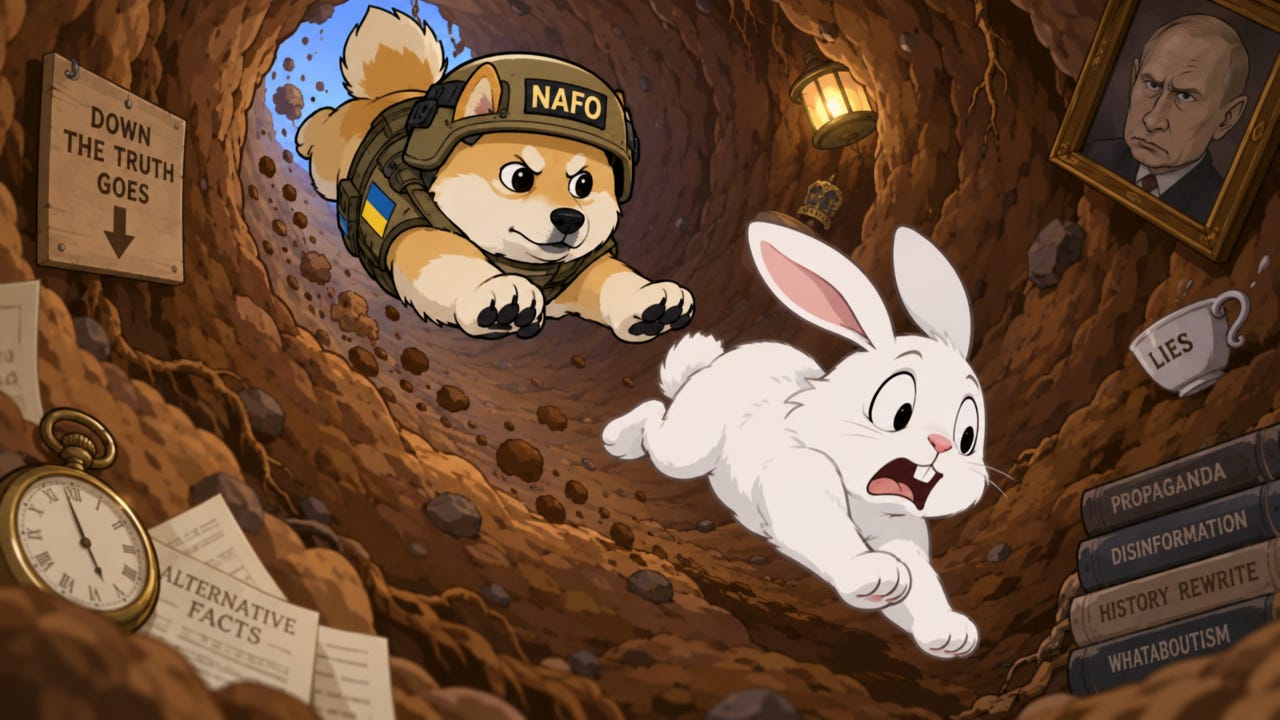
A forgery made in Russia, sold in London
The most influential conspiracy theory of the twentieth century was made in Russia and given its biggest push in Britain.
The Protocols of the Elders of Zion first appeared in a St Petersburg newspaper in 1903. They claimed to be the minutes of a secret Jewish council plotting to rule the world through banks, newspapers, liberalism and revolution. The text was widely traced to circles around the Tsarist secret police, the Okhrana, and it spread through Russia in Sergei Nilus’s book editions from 1905.
In 1920 it reached London. Eyre & Spottiswoode published an English edition as The Jewish Peril. The Morning Post ran a long series built on it, later collected as The Cause of World Unrest. Even The Times ran a leader asking whether the document might be genuine.
Then, in August 1921, The Times killed it. Its Constantinople correspondent, Philip Graves, showed that whole passages had been lifted from The Dialogue in Hell between Machiavelli and Montesquieu, an 1864 French satire of Napoleon III that had nothing to do with Jews at all. The proof was public, complete and on the front pages. It made no difference. The Protocols went on to Germany, into Mein Kampf, and around the world, and they still circulate today.
Three lessons from 1921 run through everything below. A conspiracy theory does not need to be true, only useful. Debunking it does not end it. And Russia’s security services understood both points more than a century ago.
A third of Britain, and not evenly spread
Conspiracy belief in Britain is not a fringe hobby. In April 2023, King’s College London’s Policy Institute asked 2,274 British adults about a range of theories (KCL Policy Institute):
32% said a “Great Replacement” of white Europeans by non-white immigrants is under way.
31% said the pandemic was a global effort to force vaccines on people against their will.
23% said the pandemic was a hoax.
18% said the Manchester Arena bombing was staged with “crisis actors”.
Those beliefs are not spread evenly across politics. Five years earlier, YouGov and Cambridge University’s Conspiracy and Democracy project put the same questions to voters on both sides of the Brexit divide (YouGov; University of Cambridge):
47% of Leave voters said the government was hiding the truth about immigration, against 14% of Remain voters.
31% of Leave voters agreed that Muslim immigration was part of a plan to make Muslims a majority, against 6% of Remain voters.
Half of Remain voters rejected every conspiracy theory they were shown. Only 29% of Leave voters did.
None of this makes conspiracy thinking a right-wing monopoly. The left has its own: Big Pharma cover-ups, “who really runs things” narratives that slide into antisemitism, and Kremlin-friendly accounts of every war. International research generally finds conspiracy thinking rises towards both political extremes, more steeply on the far right, and most of all among people who feel shut out of power. That last point matters for the new insurgent parties of the British right, which is where this piece ends up.
The main theories, in plain English
Six families of theory turn up again and again on the British right online. Each has its own vocabulary, and the vocabulary is how you spot it.
QAnon
QAnon began on the 4chan message board in October 2017. An anonymous poster calling himself “Q” claimed to be a government insider with top-level clearance. His story was that Donald Trump was secretly fighting a cabal of Satan-worshipping, child-abusing elites, and that a day of reckoning, “the Storm”, was coming.
Q stopped posting in December 2020, but the movement didn’t stop. It reached Britain during lockdown, when “Save Our Children” marches in 2020 borrowed the language of child protection. Its slogans still mark believers out:
WWG1WGA: “Where we go one, we go all”
NCSWIC: “Nothing can stop what is coming”
“Trust the plan” and “the Great Awakening”
It has also grown financial offshoots. NESARA/GESARA and the Quantum Financial System (QFS) promise a secret gold-backed money system that will wipe out debts and replace the banks. Med beds are machines that supposedly cure every illness. All three are now the bread and butter of crypto scammers, as Part Four found with the Africa-based ring of fake Trumps and Flynns.
The Great Reset, Agenda 2030 and “the WEF”
The Great Reset is a real World Economic Forum initiative, launched in June 2020 with the then Prince of Wales. It was a set of fairly bland proposals for post-pandemic recovery. The conspiracy version says global elites are using crises to strip people of property, cash, cars and freedom of movement.
The same story attaches itself to whatever is new:
Agenda 21 and Agenda 2030: non-binding UN sustainability plans from 1992 and 2015
15-minute cities: the urban-planning idea behind Oxford’s traffic filters, recast in 2023 as “climate lockdowns”
Digital ID and central bank digital currencies: recast as tools of total surveillance
Net zero: recast as a plot rather than a policy
Its tell is a list of acronyms in a bio: “Anti WEF / WHO / UN”, “No to Agenda 2030”.
Covid, vaccines and “pureblood”
Britain had an anti-vaccine movement long before covid. Andrew Wakefield’s discredited 1998 MMR paper was a British export. The pandemic turned it into an identity. People call themselves “pureblood” (a borrowing from Harry Potter) or “unvaxxed”. They say the jab is a bioweapon, and they read every sudden death as proof, a theme that the 2022 film Died Suddenly gave a name.
The Great Replacement and the “Kalergi plan”
The French writer Renaud Camus gave the Great Replacement its name in 2011. It claims that white Europeans are being deliberately replaced by non-white immigrants, on purpose and by design. The Christchurch mosque attacker used it as the title of his manifesto in 2019.
Its even darker twin, the “Kalergi plan”, twists the 1920s writings of a pan-European aristocrat into a supposed Jewish blueprint for mixing Europe’s races. It was popularised by an Austrian neo-Nazi.
This family sits closest to mainstream politics. Phrases like “demographic security” and “remigration” now appear in party platforms on the insurgent right, which is why the survey below counts them separately rather than as conspiracy markers.
Chemtrails and the weather
The chemtrails theory, dating from the late 1990s, says the condensation trails behind aircraft are chemicals sprayed to poison, sterilise or control the population. Its British cousins blame “cloud seeding” and “geoengineering” for floods and grey summers.
“Globalists” and the Rothschilds
The oldest family is the one the Protocols invented: a hidden group that secretly controls banks, media and governments. Today it usually travels under a polite code word, “globalists”, or under the name of the Rothschilds, a target of antisemitic myth since the nineteenth century.
Not everyone who says “globalist” means it this way. Plenty mean multinationals or Brussels, and the survey below doesn’t count the word on its own. But the code word works precisely because it lets the speaker deny the older meaning.
One rabbit hole, many entrances
The six families are not separate clubs. They share one structure: a hidden elite, a lying establishment, and a small band of the “awake” who see through it. Once someone accepts that structure for one subject, it transfers easily to the next.
That is why the same accounts so often move along a recognisable path:
Lockdowns are tyranny.
The vaccine is poison, and the doctors are lying.
The WEF planned it all, and Agenda 2030 is next.
The “globalists” run the government, the BBC and NATO.
So the enemy the government names, Russia, must be the friend. “Russia is not my enemy.”
Each step makes the British state and its media the liar. By the last step, the Kremlin’s version of events looks like the honest one.
Why the Kremlin rides these rails
Moscow did not invent most of these theories, and doesn’t need to. It has a long habit of riding ones that already exist:
1903: the Protocols, from circles around the Tsarist secret police.
1983: Operation INFEKTION, the KGB’s campaign to blame AIDS on a US military lab, first planted in a small Indian newspaper and laundered into the world’s press.
2022: Russian claims of secret US “biolabs” in Ukraine, which travelled fastest through QAnon and anti-vaccine channels in the West.
The overlap is visible today in the open. As Part Four showed, Putin’s special envoy Kirill Dmitriev replies to American and British accounts in QAnon slang (WWG1WGA, NCSWIC) and follows a string of QAnon accounts. His posts aimed at British audiences lean on the same themes: “mark of the beast” digital ID, grooming gangs, a “revolution” coming to Starmer’s Britain. And the Africa-based scam ring that sells the QFS fantasy to older Western conservatives also posts Kremlin captions.
None of that shows anyone directing anyone. It shows something simpler: the conspiracy economy and the Kremlin’s messaging run on the same rails, and each finds the other’s audience ready-made.
A limited survey: Restore Britain and Reform UK
We have a first, limited measurement, and it points one way. Restore Britain’s online support carries conspiracy badges about three to four times as often as Reform’s or the Conservatives’, but they remain a small minority, and the picture splits in two.
The data comes from our earlier investigation into Restore Britain and the “Russia is not my enemy” campaign, collected from X through the Sorsa API in October 2026. It was gathered to study Restore, not to survey the whole right, so treat what follows as an introduction, not a census. Future articles will examine all parties in an equal manner.
What we counted
We looked for conspiracy markers that people write about themselves, in their own bios:
QAnon: WWG1WGA, NCSWIC, “trust the plan”, QFS, med beds
Great Reset family: WEF, NWO, Agenda 2030, Agenda 21, Build Back Better, “deep state”
Anti-vaccine: pureblood, unvaxxed, “jabs kill”, mRNA
Chemtrails, flat earth and the like
We deliberately left out the word “globalist” on its own, and “remigration” or Great Replacement language. The first is too vague. The second is too close to party policy on the insurgent right to count as a conspiracy marker. Both would have pushed Restore’s numbers up.
A bio is a badge, not a belief. A third of Britons will tell a pollster they believe in the Great Replacement, but only about one in a hundred accounts below writes any conspiracy theory into its bio. So this measures the people who wear it, not everyone who thinks it.
1. Who follows the parties
We took the newest 4,000 followers of five accounts: Restore Britain’s party account, its leader Rupert Lowe, its campaigns director Charlie Downes, Reform UK and the Conservatives. To compare like with like, we counted only established accounts: created before 2026, with at least 20 followers and a bio. That matters because nearly half of Reform’s newest followers are brand-new accounts with a handful of followers, the kind X suggests to new sign-ups.
The share carrying conspiracy markers:
@RestoreBritain: 1.46%
Charlie Downes: 0.84%
Rupert Lowe: 0.49%
Reform UK: 0.39%
Conservatives: 0.17%
Taken together, Restore’s party account and Downes come out at about 3.8 times the Reform and Conservative rate. Lowe’s own followers look much like Reform’s.
2. Two different crowds
When we asked X where the flagged accounts are based, the two Restore accounts turned out to be drawing different crowds.
Around the party account, at least 9 of the 17 clearest cases are in the United States, and only 2 in Britain. Their bios read like American MAGA: “MAGA pure blood, since the escalator”, “God bless America. Pureblood. Semper Fi”, “God, Family, Country 🇺🇸 WWG1WGA”.
Around Charlie Downes, 10 of 15 are in Britain, and six of those call themselves Restore in their own bios:
“@restoreBritain member. Trump Supporter. WWG1WGA in the name of Jesus Christ!”
“Never had the poisonous vaccines 💉☠️ .. Restore Britain member 🇬🇧….. Q WWG1WGA”
“Restore Britain. Build Back Better = WORLD Globalist Takeover. Jabs kill.”
Among the followers of Reform and the Conservatives combined, we found two comparable British accounts.
3. What declared supporters say about themselves
Across the 34,000 accounts in our data, we compared everyone who names a party in their bio. Of those naming Restore Britain, 4.7% carry conspiracy markers (30 of 632). Of those naming Reform UK, 2.2% do (3 of 134). Our data was collected around Restore, so this comparison is a direction, not a measurement.
The tone differs as much as the rate. Reform’s three are mild: anti-WEF, “climate hoax”, “vax free”. Restore’s often carry the full set:
“MEMBER OF RESTORE BRITAIN. WWG1WGA. NCSWIC”
“Member of #RestoreBritain… Big Pharma Kills. Chemtrails are toxic. Net Zero is genocide.”
“Pro Putin. Pureblood. Restore Britain member since June 2025.”
That last one is where this piece meets the rest of the series. In September, 86 of the accounts posting “Russia is not our enemy” named Restore in their bios. Only 16 named Reform, a party many times its size.
4. Who is really posting
Not every “supporter” is British. We placed a random 69 of the 263 accounts that publicly posted “voting Restore Britain”, “joined Restore Britain” and similar. 84% are based in the UK. Once you allow for Britons abroad, around one in fourteen looks like a foreign account with no visible British connection.
The most extreme example sat outside our sample. An account called “Juan Derek”, with a Confederate-flag avatar, posted that “we” want “100% white Britons” and “will vote for Restore Britain. Remigration now!!!” X places it in the United States, connected through a Venezuelan Android app. Challenged, it replied that its family lives in Birmingham.
Restore is not alone. Hope Not Hate has found a cluster of Ecuador-based accounts pushing Reform, some of them attacking Restore for splitting the vote (The New World). Foreign “supporters” are fighting on both sides of the split on the British right.
5. Traffic one way
Bios also record people moving between the parties, and it all runs in one direction: a former Reform branch leader in Great Yarmouth, now a Restore member; an ex-Reform councillor in Newquay, now a Restore organiser; members who give the dates they left Reform and joined Restore. We found nobody describing the reverse journey.
What this can’t tell us, yet
This is a first look, and its limits matter as much as its findings.
It covers two parties properly, not the whole right. UKIP, Heritage, Advance UK and Britain First barely appear in data gathered around Restore. Conservative supporters rarely name their party in a bio at all.
It doesn’t cover the left. The theories above have left-wing cousins, and the same method should be run on Labour, the Greens and the far left.
The numbers are small. Reform’s established-follower rate rests on three accounts. The direction is consistent across every measure; the exact ratios are not firm.
Bios are a floor. Most people who believe these things never write them down. The true levels are higher everywhere, though the comparison between parties uses the same yardstick.
X’s locations are X’s inferences. Travel and VPNs can mislead in single cases. Patterns hold up better than individual accounts.
The next piece in this series runs a full survey across all the parties, left and right, with the same two measures: the newest followers of each party’s official accounts, and the accounts publicly declaring their support. Then we can say whether what we found around Restore is unusual, or simply the British right as it now is online.
Method notes and sources
Data. X data was collected through the Sorsa API between September and October 2026 for our investigations into Restore Britain and the “Russia is not my enemy” campaign: about 34,000 account profiles, newest-follower samples of 4,000 accounts each for five party accounts, and X’s own “About this account” placements for the flagged and sampled accounts.
Markers. Counted in bios and display names: WWG1WGA, NCSWIC, QAnon, “great awakening”, NWO, “new world order”, “great reset”, WEF, Agenda 21/2030, “deep state”, “build back better”, plandemic, pureblood, unvaxxed/unvaccinated, anti-vax, “jabs kill”, mRNA, chemtrails, flat earth. Not counted: “globalist” alone, remigration and Great Replacement language. Every flagged bio was read by hand; obvious false positives (”fully vaxxed”, “not an antivaxxer”, jokes) and duplicate accounts were removed.
Comparisons. “Established accounts” means created before 2026, with at least 20 followers and a bio. Differences were tested with Fisher’s exact test. The combined Restore figure against Reform and the Conservatives is significant (p < 0.01); against Reform alone it is not, because Reform’s count is so small.
What it doesn’t show. Follows and bios show who an account attracts and how people describe themselves. They do not show anyone directing, paying or coordinating anyone.
Sources
Conspiracy belief among the UK public, King’s College London Policy Institute (2023)
“Brexit and Trump voters are more likely to believe in conspiracy theories”, YouGov (2018)
Conspiracy and Democracy project, University of Cambridge (2018)
“Why are there so many Ecuadorian Farage fans on X?”, The New World (2026)

