


In 1932, a Cambridge psychologist called Frederic Bartlett published a book called Remembering. He showed that people don’t receive information neutrally. They process it through pre-existing mental structures he called schemas. The schema shapes what arrives. Details that fit are kept. Details that don’t are dropped. And the schema is invisible to the person using it.
Ninety-three years later, this is the most profitable insight in the world. It just isn’t called schema theory any more. It’s called the algorithm.
Here are three people. They operate in completely different fields. They have nothing obvious in common. But they are doing exactly the same thing.
The first is Suzanne Mulholland, known as the Batch Lady. She presents a programme on Channel 4 called Batch from Scratch: Cooking for Less. It helps families save money on food. The show is produced in partnership with Lidl. She has five Sunday Times bestselling cookbooks, an Amazon storefront earning affiliate commission on freezer bags and measuring spoons, brand partnerships with Trolley Bags, half a million followers, and a farmhouse in the Scottish Borders. Her co-presenter is a former EastEnders actor married to a woman worth seven million pounds. The programme teaches a single dad in Manchester how to feed his kids on a budget. The content is helpful. Nobody is the villain. But the single dad is watching people whose combined wealth exceeds five million pounds show him how to be poor more efficiently, while being invited to buy the branded spoons.
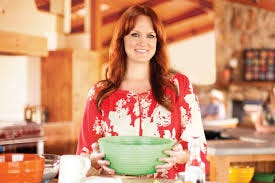
The second is Ree Drummond, the Pioneer Woman. She runs one of the most successful food brands in America from a cattle ranch in Oklahoma. Cookbooks, a Food Network show, a magazine, a product line, a restaurant, a general store. The content is warm, generous, family-centred. It says: this is how to live well from the land, the way people used to, before everything went wrong. The ranch is beautiful. The lighting is perfect. The message is that the good life is still possible if you go back to basics. The product line is available at Walmart.
The third is Robert F. Kennedy Jr. He is the current US Secretary of Health and Human Services. Before that, he ran an organisation called Children’s Health Defense, from which he promoted anti-vaccine positions, hosted the Indian anti-GMO activist Vandana Shiva, and argued that Bill Gates was engineering a “new feudalism” through control of seeds and farmland. The content says: powerful hidden actors are poisoning your food, your children, and your future. The truth is being suppressed. He is revealing it.
What do these three have in common?
They each operate through a different pre-existing cognitive structure. A different schema. In my academic work I call these templates, because they function like the slits in a double-slit experiment. Information passes through them and arrives shaped by whatever structure it passed through. There are three of these templates, and they are very old.
The Batch Lady passes through the Institutional template. This is the template that says: follow the proper method and things will improve. It’s the template of home economics, the WI, the NHS, the BBC. Procedural legitimacy. Trust the process. It goes back, arguably, to the Sumerian bookkeepers. When information passes through this template, it arrives feeling trustworthy and legitimate.
The Pioneer Woman passes through the Dispensationalist template. This is the template that says: the world has a script, the faithful will be provided for, and the good life is available to those who follow the right path. The ranch is the promised land. The cooking is the ritual. When information passes through this template, it arrives feeling hopeful and redemptive.
RFK Jr passes through the Protocols template. This is the template that says: a hidden hand is at work, the truth is being suppressed, and the target rotates but the structure of the conspiracy is conserved. Gates, Monsanto, Big Pharma, the seed banks. The target changes. The architecture doesn’t. When information passes through this template, it arrives feeling urgent and revelatory.
Three templates. Three completely different people. Three different domains. Food, lifestyle, politics. And yet the extraction mechanism underneath all three is identical.
Each of them has a platform. Each of them monetises attention. Each of them extracts rent from the identity of the person watching. The Batch Lady extracts from your anxiety about not coping. The Pioneer Woman extracts from your longing for a life that feels real. RFK Jr extracts from your fear that the system is lying to you. Different emotions. Different templates. Same transaction.
The platform doesn’t care which template you inhabit. Instagram, YouTube, TikTok, Amazon, Walmart. The monetisation layer is template-agnostic. It takes its cut from all three equally. The template just determines which emotional channel carries the signal. The platform collects the rent regardless.
And the person being extracted from cannot see the extraction. That is Bartlett’s point. The schema is invisible to the person using it. The Batch Lady’s viewer sees help. The Pioneer Woman’s viewer sees hope. RFK Jr’s audience sees truth. None of them see the affiliate link, the brand partnership, the data harvested from their attention, the commission earned on the spoon.
This is why nobody can agree on what is wrong. The political class thinks the problem is policy. The psychologists think it is mental health. The economists think it is wages. The tech people think it is misinformation. They are all describing the same elephant in the room from different angles. The actual mechanism is simpler than any of them suppose.
The monetised attention economy has industrialised the exploitation of Bartlett’s schemas. It identifies which template you inhabit. It feeds you content shaped to pass through your template with minimum resistance. And attached to that content, underneath it, is a monetisation layer that extracts rent from your identity. From your sense of who you are and who you should be and what your life should look like.
In 1971, Delia Smith published a book called How to Cheat at Cooking. It showed you how to make dinner. You bought the book for a few pounds and that was the end of the transaction. The schema was the same. The Institutional template was the same. But there was no platform underneath it extracting rent. There was no algorithm identifying your template and feeding you optimised content. There was no affiliate link. There was no continuous, intimate, algorithmic exposure to a life you cannot afford.
The transaction ended when you bought the book. Now it never ends. The extraction is continuous. And the distance between the life you are shown and the life you can afford is the rent. It is paid not in money but in adequacy. And when the bill comes due, it arrives not as debt, though there is plenty of that, but as anger. Anger at the government. Anger at the system. Anger at whoever is nearest. Because the actual source of the extraction is invisible. It passed through your schema before you had a chance to see it.
A spoon, a ranch, and a Kennedy. Three templates. One mechanism. And a word nobody has defined.
The word is “living.” As in, cost of. Every official definition says it means the cost of basic needs. Food, shelter, energy. But that is not what people mean when they say they cannot afford to live. They mean they cannot afford the life that now counts as a life. And that definition is being set, continuously, by an industry that did not exist twenty years ago, that operates through cognitive structures identified ninety-three years ago, and that is completely untaxed.
That is the rent. And until someone names it, no one can tax it. And until someone taxes it, the anger will not stop. Because the lever people keep pulling is not connected to the thing that is hurting them.
All proceeds from this Substack are donated to Ukrainian causes.
I like this analysis a lot.