


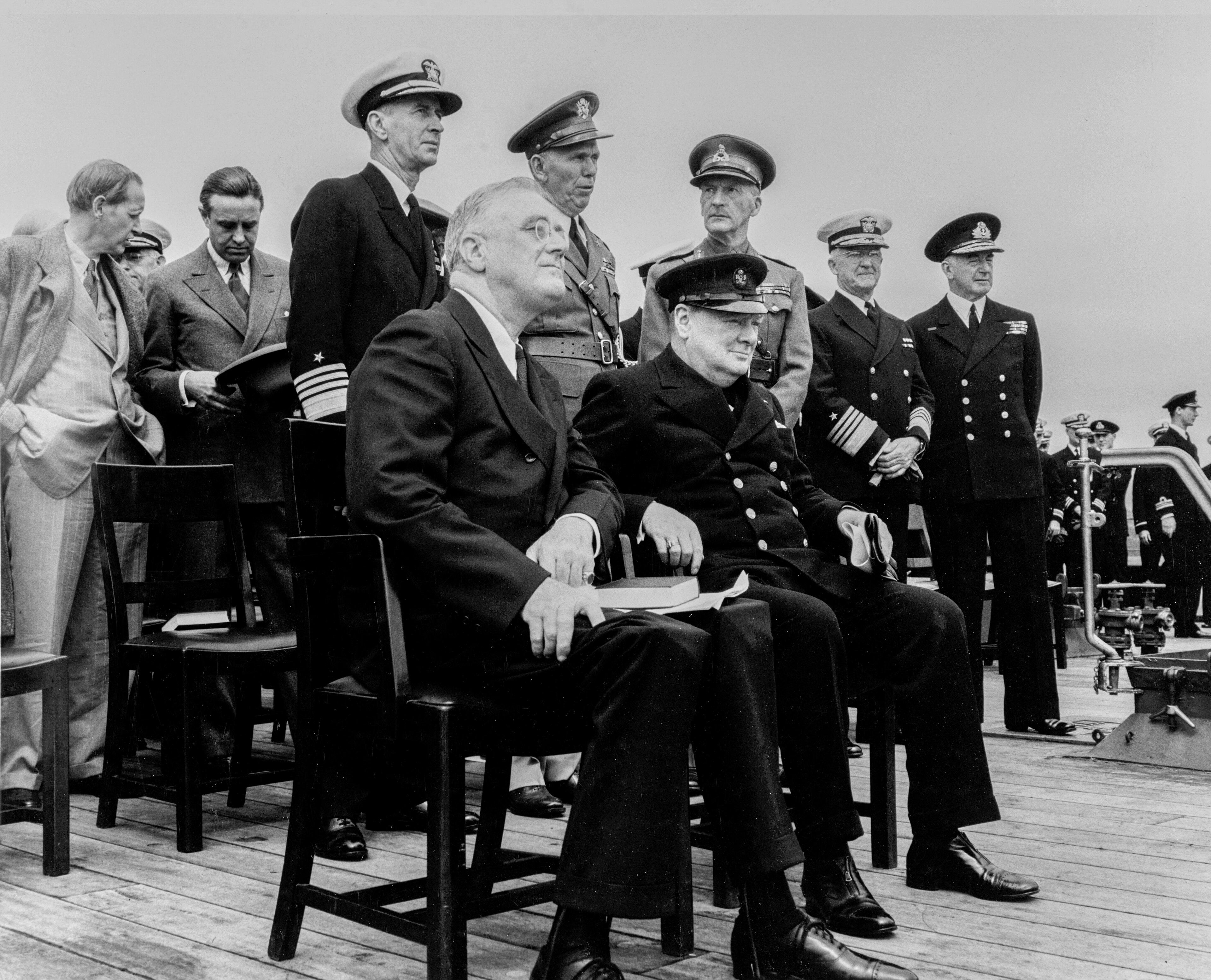
In July 1944, in a hotel in New Hampshire, forty-four nations sat down and agreed how money would work after the war. They produced a system that ran the international economy for twenty-seven years and underwrote the dollar’s reserve status for fifty-five. The system was Bretton Woods. The men who built it understood, even if they did not always say so, that a monetary order is a security order in different clothes.
That order is ending.
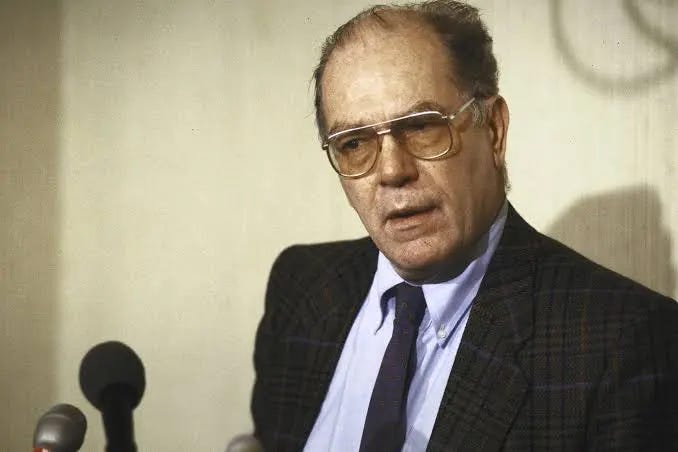
It is not ending in the way the textbooks anticipated, through inflation or current-account crisis or the slow grinding rise of a credible competitor currency. It is ending through privatisation. The yield on the dollar’s reserve status, which has accrued for half a century to the US Treasury and through it to the public balance sheet, is being captured by a small set of equity holders. Their political representatives now hold cabinet positions in the United States. Their largest single donor in the United Kingdom has given Reform UK more money than any living person has ever given a British political party. The vocabulary through which the transition is being narrated, to Global South audiences and to Western voters alike, was written in 1975 by a man most people remember, if at all, as an eight-time American presidential candidate with a fraud conviction.
This series is about how that happened, who is doing it, and what it means.
It is in nine parts.
The first establishes what Bretton Woods actually was. Not the cartoon version, but the negotiation, the architecture, and the Sunday-evening television address in 1971 that ended it without ending the dollar’s reserve role. The second introduces Lyndon LaRouche, whose 1975 call for a “New Bretton Woods” is the source code for vocabulary now spoken by serving cabinet members in the USA. The third traces the rise of crypto and, more importantly, of stablecoins, the instruments that converted a libertarian technical project into the largest private claim on US Treasury yield in history.
The fourth is the parable: Ross Ulbricht, the only major crypto operator to take the ideology at face value, and the twelve years he spent in prison while the people who built what came after him built political access instead. The fifth returns to LaRouche, posthumously, and tracks the personnel chain from his 1976 economic-publications staff to the desk of the State Department’s current Senior Advisor in Policy Planning, and from his senior aide in 2016 to the radio show on which the Treasury Secretary announced his candidacy in 2024.
The sixth opens the second-order extraction: AI compute, data centres, the natural resources both require, and why the geographic pattern of the buildout maps onto the dollar perimeter in ways that are not coincidental. The seventh follows the same architecture into the Russian and post-Soviet space, from a fake-breakaway Moldovan territory’s industrial-scale mining operation to a London-based emerging-markets fund seeded with Russian state-derived capital and now sitting, via undeclared beneficial ownership, behind a serving member of the House of Lords. The eighth examines the retail political layer, Reform UK, the Trump administration, the Musk complex, as what it structurally is, which is the distribution and protection layer of a single financial trade.
The ninth presents the bill.
Three frames are worth establishing at the outset, because they recur throughout.
The first is that the people in this story are mostly not breaking the law as currently written. That is the problem. The legal architecture in the United Kingdom, the United States and Europe was designed for an era in which political influence, financial extraction, and foreign interference were separate offences pursued by separate agencies. The architecture being constructed in front of us treats them as a single integrated business. The Electoral Commission cannot prosecute enterprise. The Financial Conduct Authority cannot subpoena a Treasury Secretary. The Foreign Influence Registration Scheme covers some of the funding vectors and none of the cap table.
The second is that conspiracy is the wrong frame, and conspiracy theories are the wrong response. What the documentary record shows is enterprise, in the technical sense the American RICO statutes use that word: a continuing structure of named individuals in named relationships, generating coordinated outputs without requiring a central command. Each operator continues to maximise returns within their own network. The structural outputs align because the operators have been working together, in declared and undeclared relationships, for decades. The series will name them and date the relationships. Readers can draw their own conclusions about coordination.
The third is that none of this is hidden. Every figure named in this series, every donation, every cap-table position, every offshore beneficial ownership entry, every dinner attended and yacht boarded, is in the public record or in leaked records that have been authenticated by mainstream investigative journalism. The information operation is not one of concealment. It is one of distribution. The facts exist in fragments across the Financial Times, the South China Morning Post, OCCRP, leaked Mauritius beneficial-ownership records, Companies House filings, Hansard, the Lords Register of Interests (and its omissions), the Epstein files, Bellingcat reports, US House Oversight Committee disclosures, and a dozen smaller fragments. No single outlet has assembled the picture. This series assembles the picture.
A word on what this is not.
It is not an argument that crypto is bad, or that AI is bad, or that gold should not be in central-bank reserves. The technologies are technologies. The metals are metals. The argument is about who profits and at whose expense, and about whether the institutional integrity of the dollar, and through it, of every alliance and security commitment the dollar underwrites, is being treated as a commons to be enclosed or as a public good to be defended. The current trajectory is enclosure. The series documents the enclosure and proposes a response.
It is also not an argument about American exceptionalism. Bretton Woods was American leverage, exercised in 1944 because the American economy was the only one left standing. The system it produced was nonetheless a public-goods system, in the sense that its yield was socialised through the public balance sheets of every dollar-system country. What is replacing it is not a public-goods system. It is not even a private-goods system in any conventional sense. It is something new: a public infrastructure being privatised by its administrators, with the privatisation marketed as decolonisation to the very Global South audiences whose dollar exposure is most likely to be wiped out when the architecture finishes failing.
The vocabulary for this matters. “Decolonisation” is what the messengers say. “Privatisation” is what is happening. The two words describe the same transactions from opposite ends of the ledger.
The series begins next, with the New Hampshire hotel.
We will end nine pieces later with a question that the documentary record makes unavoidable, which is whether the United Kingdom, having handled the funding vector through the Rycroft Review’s overseas-donations cap and the crypto-donations ban, now intends to handle the enterprise. The answer to that question will determine whether the political class that wrote those reforms in March 2026 is willing to follow them to their structural conclusion, or whether the reforms will be the high-water mark of a response that arrived in time to be photographed but not in time to matter.
That is the argument. The evidence follows.
Links to each part in order:
Part 1 - Bretton Woods: a history

The Mount Washington Hotel sits at the foot of the Presidential Range in northern New Hampshire, a white wooden building with red roofs, built in 1902 by a New Jersey industrialist who wanted somewhere fashionable to spend July. In the summer of 1944 it was requisitioned for three weeks by the United States Treasury, which had decided that the post-war …
Part 2: Lyndon LaRouche and Bretton Woods

Let us begin with the embarrassing part, since the embarrassment is half the point.
The New Bretton Woods - Part 3 - The Development of Crypto and Stablecoins

The conventional history of crypto runs as follows. A pseudonymous coder publishes a white paper in October 2008, in the smoking wreckage of Lehman Brothers, proposing a peer-to-peer electronic cash system that does not require a trusted third party. A small community of cryptograph…


New Bretton Woods. Part 6 - AI, crypto, and the resource theft

There is a habit, when looking at the crypto trade and the AI buildout, of treating them as software stories. Tokens, models, weights, yields. The habit is a mistake, and it is an expensive one, because it hides the thing that actually matters. Underneath the software is a physical system: power stations, transmission lines, cooling water, refineries, m…
New Bretton Woods: Part 7 - Resurrection of the dead

Begin with the strangest fact, because everything else in this part hangs from it. The official ideology of the Russian state, the one poured into its newest cathedral and written into the papers of the men closest to its president, holds that the dead will be raised. Not metaphorically. Physically, by science, in time, and …
New Bretton Woods: Part 8 - The Retailers

Part 7 ended at an airport. The doctrine had spent fifty years preparing to narrate a fact, and at Hostomel the fact refused to occur: the air bridge was denied, the paratroopers were ground down, and the state-television triumph reel was left describing a victory that never happened. A pres…
New Bretton Woods: Part 9. The bill

Part 8 ended with a photograph and a promise. The photograph was the Brussels dinner of 2017: eight people, a populist vehicle, a Belgian lawyer, a 501(c)(4) structured for opacity by Jeffrey Epstein, and at the far end of the table a gold miner with Chinese-state joint ventures whose presence nobody had been able to explain. The promise was that the re…