


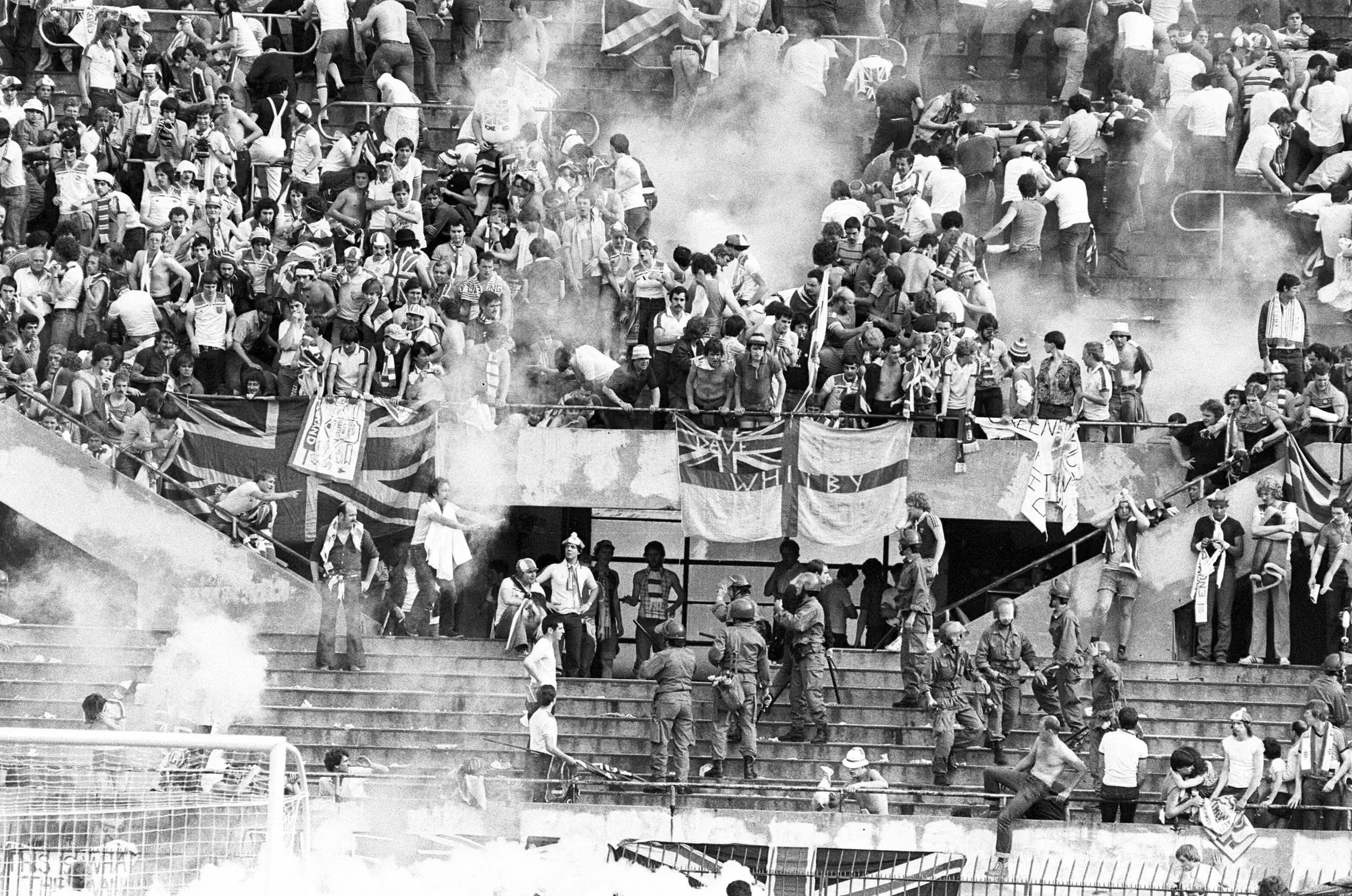
Author’s Note
This essay is not written from theory, polling, or social media. It is written from lived experience. The people described here are not abstractions to me. They are my family, my neighbours, my school friends, and myself. I am not offering nostalgia, apology, or denunciation. I am trying to explain how a particular Britain formed us, how it still echoes in politics today, and why misreading that history leads to bad policy and unnecessary harm.
What follows is testimony. Read it as such.
Smalltown Boys: Why They and the Song Still Matter
This episode is about my early life. These videos sum up my experiences of public life in Britain in the 1970s and 1980s: grinding poverty, violence, racism, and petty crime. I stood on stalls raising money for the miners and for anti-apartheid campaigns with my mother. My first protest march was at the age of three, against council spending cuts.
It is also about why public policy and public discourse have been fundamentally wrong about modern Britain, and why journalists and policymakers often do not understand the country they believe they are running.
Welcome to my childhood, and that of my friends.
When Bronski Beat released Smalltown Boy, it wasn’t poetry. It was reportage.
Two of our closest friends are gay. One is from Bedford. One from Derbyshire. Both were attacked repeatedly. Both were beaten, bullied, threatened, chased. Both did the same thing in the end. They escaped to London. Not for culture. Not for nightlife. For safety.
That song wasn’t about abstract alienation. It was about running because staying meant getting hurt.
I grew up in the same Britain. I’m 55 now. I support Arsenal from the pre-Sky Premier League times when they never won anything. I lived through Kes and Grange Hill, not Harry Potter. The people now discussed as a “problem electorate” are my family, my neighbours, my school friends. I didn’t meet them online. I stood next to them on terraces and in playgrounds.
That’s why I want to talk about two London events this year, and what they actually mean to people like me.
Because they are being badly misread.
The Britain I Remember
At school, the racism was horrific. Casual. Routine. Antisemitic slurs were used to shame kids who wouldn’t spend money. Black children were dehumanised with chants lifted straight from football terraces. This wasn’t whispered hatred. It was group performance.
There was no discipline in the playgrounds. Worse than that, some younger male teachers joined in. They laughed. They wanted to be “one of the lads”. Older teachers disapproved, but they were losing authority. Children saw the split clearly. Values were optional, enforcement was personal, and power came from fitting in.
That lesson stuck.
The schoolyard and the terrace weren’t separate worlds. They shared language, rhythm, and cruelty. Saturday tribalism didn’t start in politics. Politics arrived much later and borrowed the script.
People now flinch when stories emerge about Nigel Farage’s school years. Many of his voters don’t. They recognise him. Not as an outlier, but as familiar. He sounds like someone they grew up with, or like themselves. I recognise him too. I knew people like that. Casual violence on the school bus and in the playground, pencil-sharpener blades used as improvised weapons.
This isn’t about excusing racism. It’s about understanding how it became ambient, how it was normalised, and how pretending otherwise guarantees we misread what followed.
Watford, Luton, and Memory
I once misremembered a Watford–Luton match, confusing the early 1980s with 1997. Then I realised why. I had been to both.
In the 1980s, we were pushed through a police-lined corridor to the train station while bricks rained down on us. That wasn’t exceptional. It was logistics. By 1997, the violence was residual rather than dominant, but the scripts were the same.
The same feeling.
The same threat.
That’s how memory works. It stores patterns, not timestamps.
It matters because the cohort formed in that era is the same cohort now over-represented in Reform’s support. This is not because football caused politics, but because a culture of ritualised confrontation trained people in a particular way of seeing conflict.
The Midlands Mirror
My wife grew up in an ex-coal-mining village in the Midlands. Deep poverty in the late 1970s and 1980s. Rapid loss of social cohesion. Racism just as brutal as anything I saw.
Her village had a Wesleyan Reform church with hundreds in the congregation into the 1980s and 1990s. I visited it in the late 1990s. It was full at Christmas. Today there are a handful of pensioners and a visiting lay preacher.
That church wasn’t about identity. It was social glue. Alongside the mining unions, it provided structure, care, and mutual obligation. When the pits went and the unions were smashed, the church hollowed out too.


This is why imported US-style Christian nationalism doesn’t map onto Britain. British Christianity wasn’t a culture-war banner. It was infrastructure, and it collapsed when the social world around it collapsed.
When people talk about “bringing back Christian Britain”, they’re not restoring anything that actually existed. They’re projecting a fantasy onto a ruin.
Escape Was the Only Option
Our two gay friends didn’t “move for opportunity”. They fled. London was an escape route.
My wife and I were lucky. We benefited from student grants and free university education, now long gone in England. We escaped as students and built a new life.
That’s why Smalltown Boy still matters. It documents a Britain where staying could kill you slowly, or quickly.
My mother was a trade unionist. During the AIDS epidemic, she organised travel and protection for gay union members when they were attacked by fellow unionists. That matters too. Solidarity existed, but it was fought for and usually provided by other “outsiders”. It was never automatic. Nostalgia erases that struggle and replaces it with comfort.
The Economic Through-Line
This same cohort (55-75) has been economically battered again and again.
Early 80s deindustrialisation.
Late 80s housing boom.
Early 90s crash (negative equity).
Black Wednesday.
A long grind, then a false calm.
The 2008 financial crisis.
Brexit.
Covid.
After four or five shocks across a lifetime, distrust stops being paranoia and becomes pattern recognition.
Covid, in particular, was a live stress test of institutional competence. Poorly communicated rules. Uneven enforcement. Visible hypocrisy. For a cohort already trained to believe institutions say one thing and do another, this wasn’t shocking. It was confirmation.
That doesn’t make the distrust virtuous. But it makes it legible.
The Two London Events, Revisited
This year, London saw two very different protests. The Guardian (Dec 13, 2025) says the Christmas carol event had ~1,000 people at peak, and contrasts it with “estimated 110,000” at Robinson’s “Unite the Kingdom” rally in September. The Guardian
One was explicitly religious, framed as a moral revival.
The other was a mass far-right street mobilisation. It was held on the same day as four major football matches in London.
Arsenal vs Nottingham Forest — attendance 60,167 ESPN.com+1
West Ham United vs Tottenham Hotspur — attendance 62,459 Sky Sports+1
Brentford vs Chelsea — attendance 16,795 Football Web Pages
Charlton Athletic vs Millwall — attendance 23,293 Sky Sports+1
Total attendance: 60,167 + 62,459 + 16,795 + 23,293 = 162,714
These were not two expressions of the same thing.
The religious event was an import attempt. It was US-style Christian nationalism, stripped of church infrastructure, dropped into a secular European society with a state religion that no longer functions as a mass organiser. It failed because it misunderstood British history.
The mass march succeeded because it tapped a familiar grievance coalition. Older, male, English, distrustful of institutions, and comfortable with street politics. It wasn’t a growing movement. It was a demographic echo, amplified by timing (with the 4 matches) and cultural familiarity.
Treating both as evidence of a permanent national shift is a mistake.
The Lie of the Golden Age
There is a dangerous nostalgia circulating now. The idea that Britain used to be cohesive, moral, and safe, until something went wrong.
That story erases victims. It erases the bullied, the beaten, the murdered, and the driven out. It erases the fact that many people survived by leaving.
Brexit was not destiny. It was an electoral blip, driven by a cohort reaching peak electoral power after a lifetime of shocks. The worst response to that blip is to encode it into permanent policy by shifting the Overton window.
Racism is not defeated by pretending the past was kinder. It is defeated by honest memory, social repair, and boring, consistent institutions that enforce their own values.
My son is a trans man. When we went to his school, my wife and I were scared for his safety, based on everything we had lived through. Instead, the school, the teachers, and the other pupils were extraordinary. They were supportive, kind, and competent.
He is now 20, studying for a master’s degree at a leading oceanographic institute.
A lifetime of fear was overturned by institutional kindness.
People like me aren’t asking to go back.
We’re asking you to stop romanticising a past that hurt and killed many people, and to fix what actually broke.
Because Smalltown Boy was never about nostalgia.
It was about escape.
Appendix:
Farage, Tommy Robinson, and the “recognisable” base
Nigel Farage: school allegations (Guardian)
The Guardian has run several pieces in 2025 compiling and contextualising allegations from former Dulwich College pupils about Farage’s behaviour at school, including racism and antisemitism claims, and reporting Farage’s denials / responses.
Key Guardian explainer + reporting:
Explainer: “Nigel Farage: what are schoolboy racism claims – and why have they resurfaced?” The Guardian
Feature/reporting: “‘Deeply shocking’: Nigel Farage faces fresh claims of racism and antisemitism at school”t The Guardian
Update: “Farage turns on broadcasters over racism allegations as number of claims hits 28” The Guardian
Specific allegation (reported as a former pupil’s account): “Former Dulwich pupil says Farage told him: ‘That’s the way back to Africa’” The Guardian
Letters follow-up: “Nigel Farage is wrong – victims don’t forget bullying and abuse” The Guardian
Comment piece referencing the resurfaced claims and Farage’s response style: “Will Farage’s Trumpian strategy work against him?” The Guardian
These stories matter less as “gotchas” than as signals of recognisability, to some voters, they read as “that’s what school was like”, not as aberration.
Tommy Robinson: Luton roots + football-firm origin (and why it matters)
Tommy Robinson is Stephen Yaxley-Lennon, from Luton The Guardian+1
Robinson’s public origin story is repeatedly described as intertwined with Luton Town hooligan culture, and his nom de guerre is widely reported as taken from a football hooligan.
Guardian reporting (context on the name’s “football hooligan” association in court coverage): The Guardian
A mainstream profile noting his Luton hooligan connections and the name being “borrowed” from a notorious hooligan : The Week
Why this matters for the 55+ football-shaped base: the early EDL-era street model drew on pre-existing male networks where “us vs them”, chanting, policing, and confrontation were already familiar.
Farage ↔ Robinson
A useful “bridge” article (again Guardian) is the 2018 row when UKIP leader Gerard Batten appointed Robinson as an adviser and Farage publicly reacted. It’s a neat example of electoral wing vs street wing tension, even as audiences overlap:
“Ukip returns to infighting after Tommy Robinson appointment” The Guardian
You’re 55? Nice! Just turnt 59. 🎉
Powerful testimonyhere. The line about how distrust becomes pattern recognition after repeated economic shocks cuts through so much commentary. I grew up in a simialr environment (different country, same vibe) and the way institutionl kindness toward trans son flipped lifetime fear is just beautifully told. The refusal to romanticize the past while still explaining its pull is what's missing in most Brexit retrospectives.