


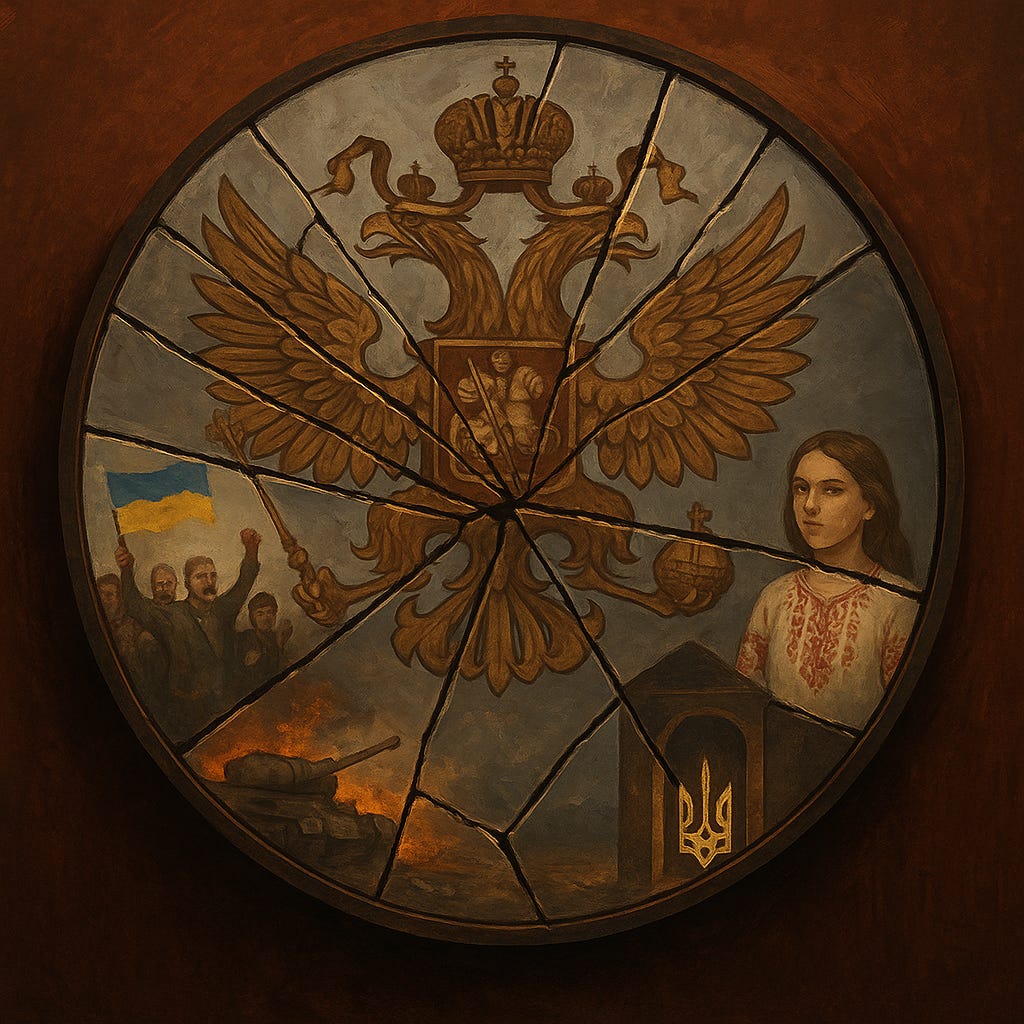
In the ongoing russian invasion of Ukraine, much has been said about NATO expansion, Russian imperialism, and security guarantees. But beneath the tanks and treaties lies a stranger, older story — one of liminality, identity, and the spaces between worlds.
The Borderland as Battlefield
Ukraine has always occupied a liminal space. The very name “Ukraine” derives from a Slavic root meaning "borderland" or "edge." For centuries, it has been a frontier zone: between East and West, Catholic and Orthodox, Latin and Cyrillic, steppe and forest.
In myth and ritual, liminal spaces are powerful and dangerous. Ancient European cultures offered sacrifices at riverbanks, crossroads, and forest edges — to appease spirits, gods, or the unknown. In a modern echo, Ukraine has become a sacrificial space in the eyes of empire. Its defiance isn’t just political — it’s a rejection of its role as threshold.
Liminality in the Ancient World
In many ancient cultures, boundaries were not neutral. They were charged with meaning — places where the divine could be accessed or chaos might spill through. Rivers and seas were especially potent: the East Anglian Fens, the Nile, the Tiber, the Ganges, and the Black Sea all marked not only geography but transitions between states of being.
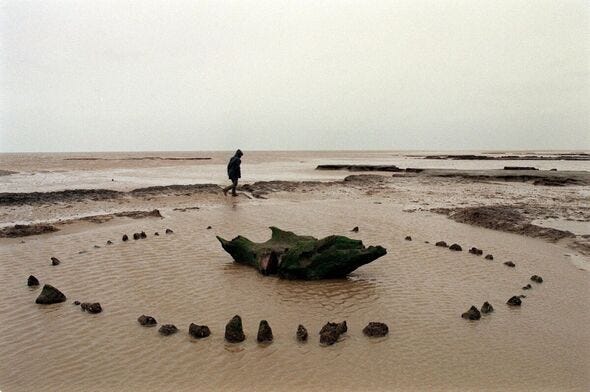
To cross a boundary often required ritual. Ancient people going back 1000’s of years deposited broken weapons into lakes and rivers, offerings to gods at the edge of the known world. Slavic paganism, too, held water edges and crossroads as spaces of spirits and danger — requiring appeasement, sacrifice, or reverence.
This tradition of sacred geography frames the edges of empires not as peripheries but as vital thresholds. In this sense, Ukraine — and particularly places like Odesa, Crimea, and the Black Sea coast — are not just military zones. They are ritual spaces, contested in both memory and myth.
Russia’s Imperial Cosmology
To Vladimir Putin, Ukraine is not a foreign country. It is a wandering limb, a lost brother, an apostate from the imagined unity of the “Russian world.” In this worldview, Moscow is the Third Rome, heir to both Byzantium and Kyivan Rus. Ukraine’s independence is not just a national decision; it is a cosmic insult to the order Putin believes he embodies.
This is why the war feels so disproportionate and fevered. It’s not just a fight over land, but over myth, memory, and destiny. Ukraine at the threshold is unacceptable to a regime that insists on total symbolic control.
The War Since 2014: A Liminal Erosion
While much attention is focused on the full-scale invasion launched in 2022, the conflict's liminal character began in 2014. With the annexation of Crimea and the manufactured rebellions in Donetsk and Luhansk, Russia did not just seize land, it fractured the symbolic boundary between empire and neighbor.
Crimea, with its mythic status as the "jewel of the Black Sea" and site of historical russian naval power, became the first ritual site in this campaign of reasserted control. It was offered back into the imperial fold like a relic, presented to appease a wounded national ego.
The Black Sea, long a liminal zone between steppe and sea, east and west, became contested sacred water. The port of Odesa, historically multiethnic and culturally fluid, now floats on a fault line, a city whose very identity resists binary occupation. Its role as gateway, haven, and crossroads makes it central to this mythic conflict.
Putin's regime attempts to transform these watery edges into fixed lines of imperial control. But water is, by nature, resistant. It leaks through boundaries, erodes empires, and floods borders. The symbolic power of Crimea, Odesa, and the sea routes between them lies not only in their strategic value, but in their refusal to be neatly owned.
Liminality as Projection, Not Fate
This is not Ukraine's myth to live out — it is Putin's delusion projected onto a sovereign nation. He has cast Ukraine as a liminal offering in a ritual he alone believes in. By invading, occupying, and mythologizing, he seeks not just territory but ritual purification, revenge, and restoration of a broken imperial ego.
Liminality, in his hands, becomes a justification for destruction. But the transformation is not Ukraine's rite of passage — it is Putin's descent into symbolic madness. The war is not a test Ukraine must pass; it is a ritual theatre orchestrated by a regime unable to confront its own irrelevance.
Ukraine is not choosing transformation through suffering. It is rejecting the script entirely, and that, more than any military alliance or foreign policy shift, is what makes it unforgivable in the eyes of a deluded empire.
Between Worlds, Beyond Control
Ukraine is not unique in being a liminal nation, but it may be the most violently punished for it in the 21st century. Its assertion of identity is not a civil war, not an internal dispute, but a declaration that all sovereign nations have a right to define themselves.
And that is something no empire, past or present, surrenders easily.
In that sense, the russian war against Ukraine is not the end of something old. It is not a sacred trial. It is a violent attack initiated by a man who believes he is conducting a ritual. Ukraine is not at the threshold. Russia is at the cliff edge because of the actions of that crazed old man.